


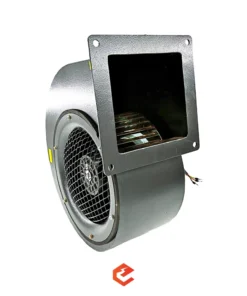
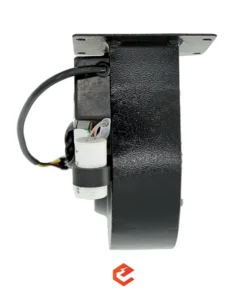
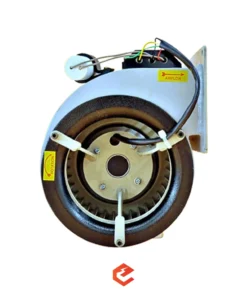
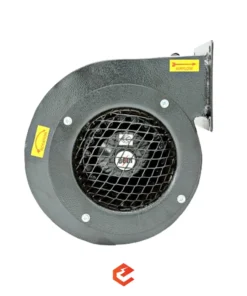
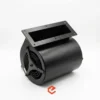
Single Inlet Centrifugal Blowers Manufacturer in India
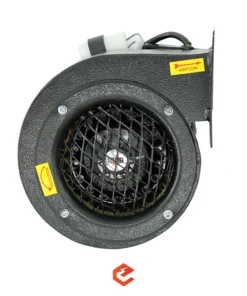
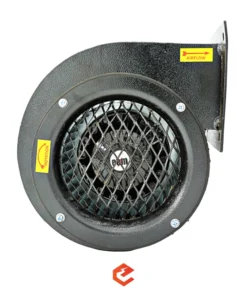
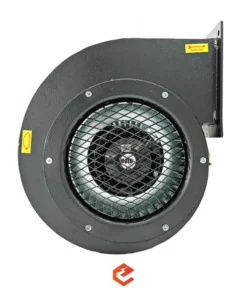
Eyyani is a single inlet blower manufacturer in India, making precision-tested blowers in-house from our own raw materials and supplying them to government projects, Indian Railways and industries across every state. Our Karnataka facility builds each blower and checks it carefully before dispatch, so it performs reliably from day one. Our single inlet centrifugal blowers are working today in Vande Bharat trains, where they helped solve a major ventilation issue, and Indian Railways trusts them. We also supply leading companies for ventilation, exhaust and HVAC applications, with 17 models from 120 mm x 30 mm to 280 mm x 155 mm and airflow from 140 to 2750 m³/hr.
What Is a Single Inlet Centrifugal Blower and How Does It Work?
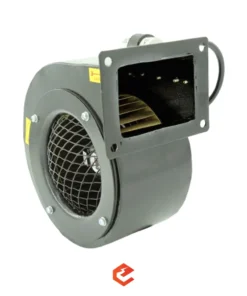
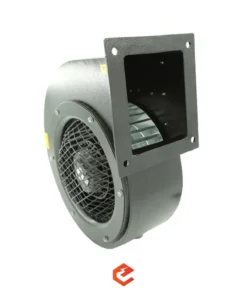
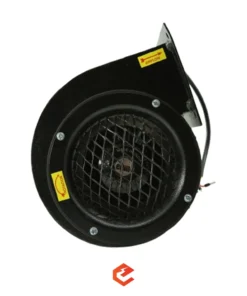
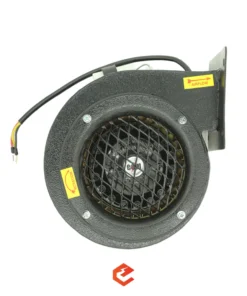
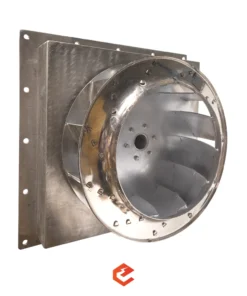
A single inlet blower is a centrifugal blower with one air suction opening and one discharge outlet. Its spinning impeller pulls air in from one side and pushes it out at higher pressure. Air enters at the centre of the impeller, and the spinning blades throw it outward into a scroll-shaped housing, which guides it to the outlet. From an engineering point of view, the volume of air entering the suction is the same as the volume leaving the discharge, but the impeller adds speed and pressure, so the air leaves stronger than it came in. This simple one-sided design keeps the blower compact, easy to install and effective at moving air through ducts and resistance.
Where Are Single Inlet Blowers Used?
- Commercial and industrial HVAC systems
- Dust and fume extraction setups
- Material handling and processing plants
- Drying and cooling operations
- Cleanroom environments
- Electronic equipment cooling systems
Why Do Industries Choose Eyyani Single Inlet Blowers?
Technical Details of the ESB Series
The ESB Series single inlet centrifugal blowers are available in multiple models with different airflow capacities, motor powers and operating speeds to meet various industrial ventilation requirements.
| Model | Poles | Phase | Voltage (V) | Current (A) | Power (W) | Speed (RPM) | Airflow (m³/hr) | Airflow (CFM) | Noise (dBA) | Capacitor (µF) | Weight (kg) | Temp. (°C) |
|---|---|---|---|---|---|---|---|---|---|---|---|---|
| ESB 120-30 S2 | 2 | Single | 230 | 0.15 | 50 | 2600 | 140 | 82 | 72 | 2 | 2 | 60 |
| ESB 120-30 T2 | 2 | Three | 415 | 0.12 | 45 | 2600 | 140 | 82 | 72 | – | 2 | 60 |
| ESB 120-60 S2 | 2 | Single | 230 | 0.25 | 65 | 2700 | 275 | 162 | 70 | 2 | 2.5 | 60 |
| ESB 120-60 T2 | 2 | Three | 415 | 0.15 | 55 | 2700 | 275 | 162 | 70 | – | 2.5 | 60 |
| ESB 133-45 S2 | 2 | Single | 230 | 0.30 | 100 | 2600 | 310 | 182 | 65 | 2 | 3 | 60 |
| ESB 133-60 S4 | 4 | Single | 230 | 0.28 | 60 | 1400 | 200 | 117 | 57 | 2 | 4 | 60 |
| ESB 133-60 S2 | 2 | Single | 230 | 0.45 | 120 | 2650 | 400 | 235 | 65 | 2 | 3.2 | 60 |
| ESB 133-60 T2 | 2 | Three | 415 | 0.40 | 110 | 2650 | 400 | 235 | 65 | – | 3.2 | 60 |
| ESB 140-60 S2 | 2 | Single | 230 | 0.40 | 140 | 2600 | 450 | 265 | 72 | 4 | 4.5 | 60 |
| ESB 150-60 S4 | 4 | Single | 230 | 0.30 | 80 | 1450 | 250 | 147 | 60 | 2 | 4.5 | 60 |
| ESB 150-60 S2 | 2 | Single | 230 | 0.60 | 170 | 2650 | 470 | 276 | 60 | 4 | 4.5 | 60 |
| ESB 150-60 T2 | 2 | Three | 415 | 0.35 | 160 | 2650 | 470 | 276 | 60 | – | 4.5 | 60 |
| ESB 160-60 S2 | 2 | Single | 230 | 1.20 | 230 | 2500 | 600 | 353 | 72 | 6 | 5.5 | 60 |
| ESB 160-60 T2 | 2 | Three | 415 | 0.35 | 190 | 2500 | 600 | 353 | 72 | – | 5.5 | 60 |
| ESB 180-75 S2 | 2 | Single | 230 | 1.30 | 270 | 2450 | 760 | 447 | 73 | 6 | 6 | 60 |
| ESB 180-75 T2 | 2 | Three | 415 | 0.50 | 240 | 2450 | 760 | 447 | 73 | – | 6 | 60 |
| ESB 200-100 S4 | 4 | Single | 230 | 0.80 | 175 | 1365 | 1370 | 794 | 68 | 6 | 8.3 | 60 |
| ESB 200-100 T4 | 4 | Three | 415 | 0.30 | 160 | 1350 | 1370 | 794 | 68 | – | 8.3 | 60 |
| ESB 225-100 S4 | 4 | Single | 230 | 1.10 | 260 | 1330 | 1450 | 852 | 70 | 8 | 9 | 60 |
| ESB 225-100 T4 | 4 | Three | 415 | 0.60 | 250 | 1400 | 1500 | 882 | 70 | – | 10 | 60 |
| ESB 250-115 S4 | 4 | Single | 230 | 2.8 | 550 | 1400 | 2900 | 1705 | 70 | – | 12 | 60 |
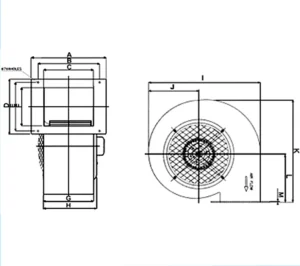
ESB Series Single Inlet Blower Dimensions, Drawings & Performance Curves
| Size | A | B | C | D | E | F | G | H | I | J | K | L | M |
|---|---|---|---|---|---|---|---|---|---|---|---|---|---|
| 120-30 | 115 | 100 | 56 | 85 | 68 | 60 | 58 | 78 | 180 | 85 | 178 | 82 | 4 |
| 120-60 | 115 | 100 | 76 | 83 | 68 | 58 | 78 | 98 | 180 | 85 | 178 | 82 | 4 |
| 133-45 | 110 | 94 | 59 | 98 | 82 | 67 | 61 | 81 | 180 | 79 | 171 | 87 | 4 |
| 133-60 | 117 | 100 | 86 | 105 | 85 | 72 | 86 | 106 | 180 | 79 | 171 | 87 | 5 |
| 140-60 | 130 | 115 | 88 | 128 | 105 | 92 | 90 | 100 | 247 | 107 | 226 | 103 | 5 |
| 150-60 | 110 | 90 | 73 | 140 | 128 | 92 | 75 | 85 | 255 | 107 | 235 | 112 | 5 |
| 160-60 | 130 | 115 | 97 | 120 | 105 | 92 | 90 | 99 | 252 | 110 | 232 | 107 | 5 |
| 180-75 | 125 | 110 | 90 | 140 | 120 | 110 | 92 | 102 | 280 | 120 | 260 | 120 | 5 |
| 200-100 | 184 | 162 | 132 | 188 | 166 | 136 | – | 160 | 370 | 151 | 327 | 146 | 5 |
| 225-100 | 196 | 176 | 144 | 200 | 176 | 144 | 147 | – | 327 | 158 | 370 | – | 5 |
| 250-115 | 227 | 207 | 206 | 218 | 190 | 167 | 152 | 95 | 387 | 194 | 392 |
Explore Our 17 Single Inlet Centrifugal Blower Models
ESB 120 30 S2 | ESB 120 30 T2 | ESB 120 60 S2 | ESB 120 60 T2 | ESB 133 60 S2, S4 | ESB 133 60 T2 | ESB 140 60 S2 | ESB 150 60 S2 | ESB 150 60 T2 | ESB 160 60 S2 | ESB 180 75 S2 | ESB 160 60 T2 | ESB 180 75 T2, S2 | ESB 200 100 S4, T4 | ESB 225 100 S4, T4 | ESB 280 110 T4 | ESB 250 115 T4
Complete the Form for Product Enquiries
Frequently Asked Questions About Single Inlet Blowers
Start with the airflow (m³/hr) and static pressure your system needs. Then check the duct size, operating temperature, and available power supply. If you are not sure, send us the details and we will pick the model for you.
Yes, we can customize blowers to your airflow, pressure, size, and mounting needs. Share your requirement and we will confirm what is possible.
Eyyani manufactures single inlet centrifugal blowers with both forward-curved and backward-curved blades. Forward-curved blades are designed for high airflow at relatively low speeds, while backward-curved blades offer higher efficiency and are suitable for applications requiring greater pressure performance. The blade type is selected based on the airflow, pressure and application requirements.






Reviews
There are no reviews yet.